The Truth Behind Old Town San Diego's Hidden Tunnels
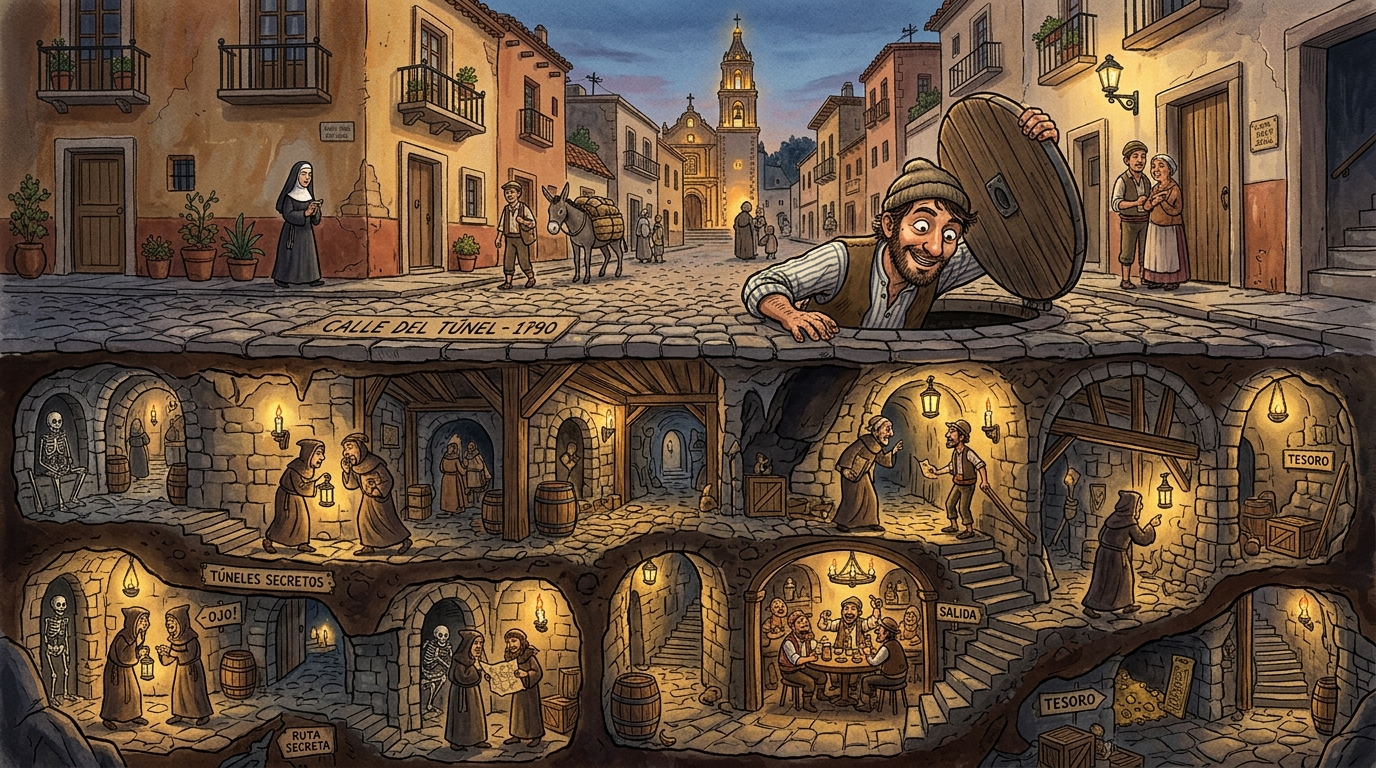
Every historic settlement that survived the frontier era eventually spawns its share of subterranean mythology, but few American cities cling to underground ghost stories quite as passionately as San Diego. Walk down the brick pathways of Old Town after dusk, past the lantern-lit verandas of 19th-century Mexican adobes, and you are almost guaranteed to overhear tour guides or locals whispering about secret passageways beneath your feet. According to neighborhood lore, a labyrinth of clandestine tunnels once connected historic saloons, private homes, and the Whaley House directly to San Diego Bay—used by Prohibition rum-runners, nineteenth-century Chinese opium rings, and fleeing frontier outlaws.
While the romantic image of swashbuckling smugglers dodging federal marshals through brick-lined escape hatches makes for irresistible campfire entertainment over margaritas, the documented historical reality tells a far more compelling tale of frontier engineering, municipal drainage, and the human impulse to see mystery in the dark.
Skip the commercial ghost-tour trapdoor fabrications and visit the Robinson-Rose House visitor center on the Plaza. State Park docents maintain meticulous archaeological records and architectural cross-sections of Old Town's excavations. For genuine architectural basements, tour the Whaley House courtyard to view the brick foundations where Thomas Whaley dug one of the few true subterranean storage rooms in 1850s San Diego.
The Anatomy of an Urban Myth: Where the Tunnel Lore Began
To understand why the tunnel rumor took such deep root, one must examine the geography of early San Diego. Established in 1769 as Alta California’s first Spanish settlement, Old Town sat at the base of Presidio Hill along the marshy delta of the San Diego River. In the Mexican Rancho era (1821–1848) and the subsequent American Gold Rush period, Old Town was an isolated frontier outpost where maritime trade was strictly taxed and frequently circumvented.
Smuggling along the Southern California coastline was undeniably real. Yankee sea captains, Mexican merchants, and coastal schooners regularly traded untaxed hides, tallow, and European contraband along Point Loma, Ballast Point, and the coastal bluffs of Sunset Cliffs. Over decades of oral storytelling, real coastal smuggling operations gradually migrated inland in the public imagination, attaching themselves to the prominent brick buildings and adobes situated miles from the water's edge.
The myth expanded dramatically during the 1920s. When the Volstead Act ushered in Prohibition, San Diego’s proximity to Baja California made it a primary conduit for illicit Mexican tequila and Canadian whiskey. Bootleggers certainly stashed crates in barns, citrus groves, and hidden floor compartments throughout the county. Yet the leap from a concealed cellar under a floorboard to an interconnected network of subterranean tunnels connecting Old Town to the ocean was a leap born of sensational newspaper headlines and tourist pulp fiction.
The Whaley House: Brick Foundations and Gallows Dirt
No discussion of Old Town's subterranean rumors is complete without examining the Whaley House on San Diego Avenue. Completed in 1857 by merchant Thomas Whaley, the Greek Revival structure was among the very first two-story brick residences constructed in Southern California, using bricks manufactured right on the Whaley property.
Before Whaley built his stately brick manor, the property served as San Diego’s public execution grounds. In 1852, a notorious thief named "Yankee Jim" Robinson was hanged from a wooden gallows on the exact parcel where Whaley later excavated his foundation. Whaley dug a substantial brick-lined cellar beneath the house for wine storage, dry goods, and mercantile inventory—an extreme anomaly in a town where Spanish and Mexican builders almost exclusively constructed single-story adobes directly on flat, rammed-earth footings without basements.
Because the Whaley cellar was unusually deep, dark, and associated with subsequent courtroom dramas, tragic family deaths, and widespread ghost sightings, amateur historians repeatedly claimed the cellar concealed a walled-off tunnel leading to the courthouse or the bay. Rigorous architectural restorations and historical audits conducted by the Save Our Heritage Organisation (SOHO) and California State Parks have systematically debunked this: the Whaley basement is completely self-contained within its perimeter footings, with solid fired-brick walls and undisturbed native soil on all sides.
What Archaeology Actually Uncovered Beneath Old Town
Over the past half-century, Old Town San Diego State Historic Park has been the subject of extensive archaeological excavations led by prominent California archaeologists, including Dr. Paul H. Ezell and park service preservation teams. Every major utility replacement, retrofitting project, and adobe stabilization has peeled back the soil layer by layer.
Archaeologists uncovered a wealth of genuine historical artifacts: ceramic olive jars from the Spanish mission era, discarded bottles of 19th-century patent medicines, cattle bones from Mexican hide-and-tallow matanzas, and brick cisterns used to capture rainwater during California's punishing droughts. What they did not find—not a single foot of it—was an underground network of human-sized tunnels.
The confusion often stems from utilitarian subterranean infrastructure:
- Water Cisterns and Brick Wells: Nineteenth-century residents frequently built deep, cylindrical brick storage cisterns beneath rear courtyards to catch seasonal runoff from tile roofs. When modern construction crews or utility workers accidentally break into an abandoned cistern, the circular brick opening is frequently misidentified by onlookers as a collapsed tunnel shaft.
- Storm Drains and River Floodworks: Before the U.S. Army Corps of Engineers permanently diverted the San Diego River into False Bay (Mission Bay) in 1853, seasonal winter floods regularly roared through Old Town. Culverts, wooden flumes, and stone runoff channels were installed over the decades to drain water away from fragile adobe foundations.
- Utility Conduits & Modern Pedestrian Tunnels: The installation of early electrical conduits, telephone vaults, and sewer lines left numerous underground access points throughout the district. Furthermore, the heavily used concrete pedestrian underpass at the modern Old Town Transit Center dodges the commuter rail tracks—a 20th-century safety feature that imaginative visitors sometimes mistake for vintage smuggler routes.
The True Allure: Preserving California's Living Frontier
The debunking of Old Town’s underground tunnel myth takes nothing away from the district's extraordinary authenticity. The real historic treasures of Old Town do not exist in shadowy labyrinths beneath the ground; they stand directly in the warm California sunlight.
Structures like the Casa de Estudillo (constructed in 1827 by Presidio commander José María Estudillo) showcase the pinnacle of Mexican adobe domestic architecture, featuring massive two-foot-thick sun-dried adobe walls, heavy timber vigas tied with rawhide, and an exquisite central courtyard garden. Nearby, the Casa de Machado y Silvas and the reconstructed Cosmopolitan Hotel (built on the 1829 foundations of Juan Bandini’s grand mansion) offer visitors an intimate window into a pivotal era when Spanish California transformed into a Mexican republic, and ultimately into the American West.
Visiting Old Town San Diego State Historic Park
- Location: San Diego Avenue & Twiggs Street, San Diego, CA 92110.
- Park Hours: Historic park grounds open daily from dawn to dusk. Historic house museums open daily 10:00 AM to 5:00 PM.
- Admission: Free entry to the state park grounds and state-operated historic adobes; nominal admission fee for the Whaley House Museum.
- Public Transit: Take the MTS Green Line Trolley, UC San Diego Blue Line, or coaster rail directly to the Old Town Transit Center.
- Highlights: Robinson-Rose Visitor Center, Casa de Estudillo, Whaley House, Seeley Stable Museum, and artisan handcrafted tortillas at the historic plaza cafes.
Authoritative Local Resources
To explore the verified archaeological findings, historic adobe preservation, and archival documentation of Old Town San Diego, consult these official resources:
- California State Parks: Old Town San Diego State Historic Park – Official park portal, historic house museum schedules, and interpretive events.
- The Whaley House Museum Official Portal – Historical archives, architectural details, and docent-led tours of California’s historic brick residence.
- San Diego History Center – Comprehensive research library, oral histories, and photographic collections documenting Alta California and Old Town San Diego.


Comments
Post a Comment